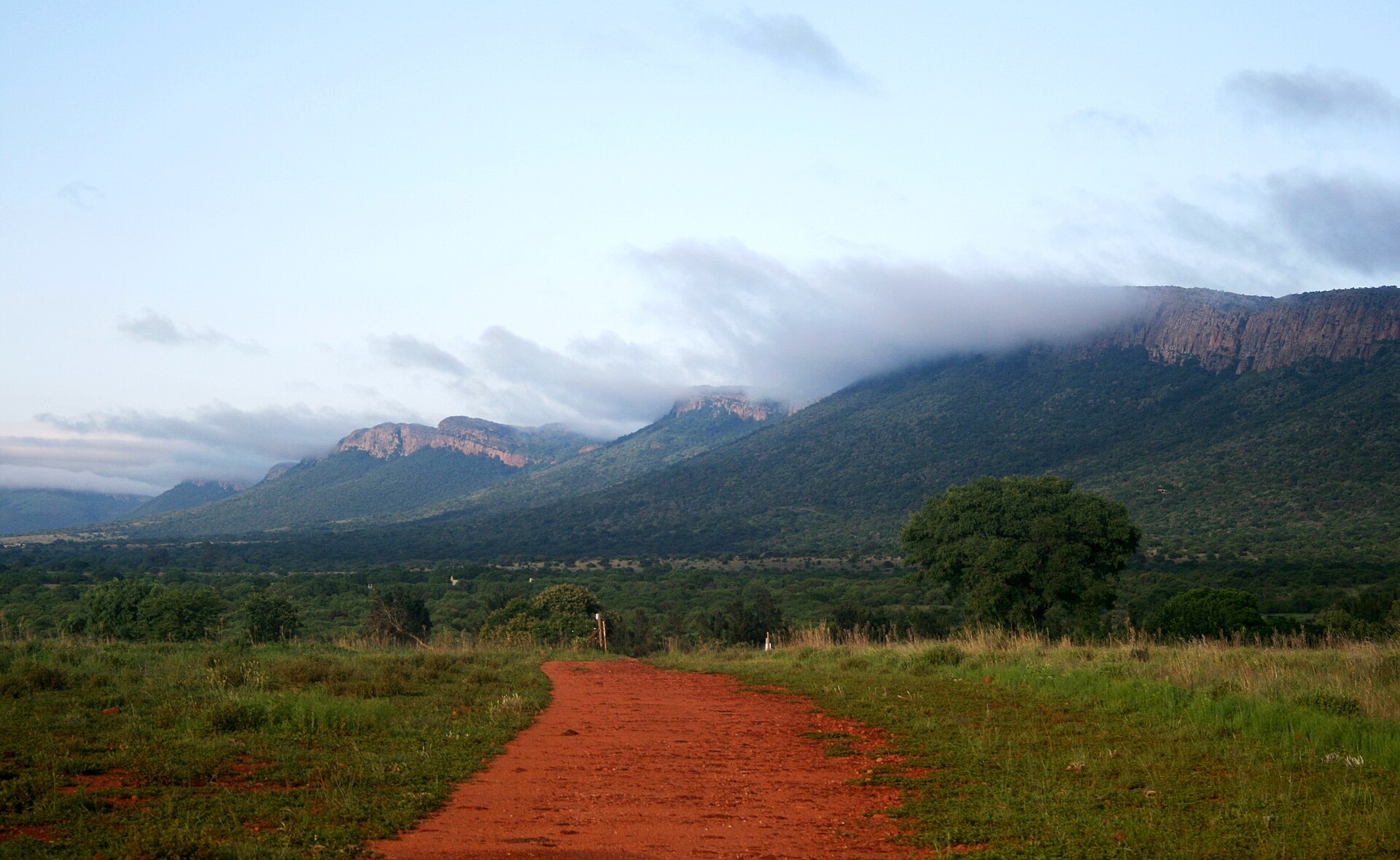
JMK · Mist over the Magaliesberg at dawn, Skeerpoort, North West · 1 January 2022 · CC BY-SA 4.0 · File page. The range, not the city centre.

Rustenburg
The story of Rustenburg
A dated fact is marked as one. A chapter that only points at a source does not invent a year, a quotation or a population figure.
Last updated 17 November 2026. This is an editorial introduction with links. It is not a copy of the source articles, and it has not had a separate historian’s sign-off. Oral history sent through the form below stays pending until it is checked.
Source, not a date
Before Rustenburg had its name
The name on this page starts with the recorded town. People lived in this landscape before that. South African History Online keeps a separate article on the prehistory of the Rustenburg area. This chapter does not assign a year to that period and does not copy the article.
Source, not a date
Earlier settlement and Iron Age history
The same prehistory article is the place SAHO discusses earlier settlement and metalworking. An Iron Age date is not stated here, because this desk has not verified one from that page. Treat any early century as unsettled until you read the source.
Interpretation needs the source
Sotho-Tswana history
Sotho-Tswana communities are part of the region’s history. This page does not summarise their political history from memory and does not invent a migration date. SAHO’s community-histories article is the linked starting point.
Named, not dated here
BaKwena history
BaKwena history belongs with the community histories, not with a date invented for this page. No founding year for a BaKwena settlement is stated here.
Fact and limit
BaFokeng history and Phokeng
Phokeng is named in the SAHO timeline for a later political event: an ANC branch there in 1990, and arrests of that branch’s executive on 15 March 1991. This page does not date the earlier arrival of the BaFokeng. That earlier history has to come from the community sources, not from a guess.
Dated fact
The arrival and founding of Rustenburg
The SAHO timeline records a Hervormde congregation on 16 November 1850, 10 December 1850 as the birth of Rustenburg, and 1851 as the year it was officially founded as an administrative centre. It records a Volksraad meeting in the town on 17–19 March 1852.
Dated fact
Nineteenth-century political conflicts
The timeline records a British annexation proclamation on 12 April 1877. It also records Paul Kruger, a Rustenburg resident, elected president in 1883. Those are entries on a timeline, not a full political history of the century.
Dated fact
The First Anglo-Boer War and the siege
The siege of Rustenburg is recorded as beginning on 27 December 1880 at a fort at the foot of the Magaliesberg, and ending on 30 March 1881. The page does not add a troop count or a quotation.
Dated fact
The South African War
The war is recorded as declared on 11 October 1899. The timeline records occupation of the town in 1900 and the Treaty of Vereeniging on 31 May 1902. No battle narrative is added beyond those entries.
Dated fact, incomplete
The development of local communities
The timeline records Ali Ismail opening a store in 1883 as Indian settlement continued despite later restrictions. Afrikaans, African, Indian and worker histories are larger than that one entry. The community-histories article is the next source, and it is not copied here.
Source, not a land audit
Colonialism, land and segregation
Annexation in 1877 is the dated colonial entry used above. SAHO’s article on Rustenburg as a segregated city is the source for how separation was built into the town. This page does not invent farm names, title-deed dates or a map of who held which land.
Dated fact
Apartheid, forced removals and resistance
The timeline records the National Party coming to power in 1948 and a nightly curfew siren after which Black people were not allowed in the streets. It records Tlhabane’s extensions and removals, and the moving of Indian residents from the town centre to Zinniaville. It records township protests in June 1976. Those entries describe forced separation and resistance. They are not a complete account.
Dated fact
The development of mining
The timeline records commercial chrome attempts in 1921 and Rustenburg Chrome Mines in 1938. This chapter stops at those dated entries. It is not a production history.
Dated fact
The rise of platinum
The timeline records De Kroon Platinums in 1925 and Rustenburg Platinum Mines in 1940. Later company history, ownership and output are not reconstructed here.
Dated fact, no statistic
Mining, communities and economic development
The timeline records a memorandum handed to Implats in December 2001. Employment, land and environmental consequences need the mining and municipal sources themselves. No jobs figure, wage or export number is stated on this page.
Dated fact
The democratic transition
The timeline records an ANC branch in Phokeng in 1990, arrests of that branch’s executive in 1991, and the ANC’s win in the 1994 election, with Popo Molefe recorded as premier of the new North West.
Description, no census
Modern Rustenburg
Rustenburg is a mining and commercial centre in North West, beside the Magaliesberg. This page does not invent a population, a growth rate or a live project status. A number belongs to a named Statistics South Africa release or a municipal document, with its date.
Platform rule
Economy, education, sport, tourism and culture
Schools, sport, tourism, culture and trade are sections of this platform. A school, club, route or business appears there only when a real record is published. This chapter does not fill those sections with examples.
No live status
Current development challenges
Water, work, housing, mining impacts and municipal services are argued in public documents. This page does not declare which project is on track. Read the municipality’s own publications and a dated official release before repeating a status.
Not a forecast
The future of Rustenburg
The next chapter is not a prediction. Work, learning, events and businesses show a record only when someone publishes a real one. A memory or a correction can be sent below. It stays unpublished until an editor checks the source and the permission.
Timeline
10 December 1850
Birth of the town
Recorded by SAHO as the birth of Rustenburg.
1851
Official founding
Recorded as founded for the surrounding region’s administration.
17–19 March 1852
Volksraad meeting
A full council meeting is recorded in the town.
27 December 1880
Siege begins
Recorded at a fort at the foot of the Magaliesberg. It ends on 30 March 1881.
11 October 1899
South African War
War is recorded as declared. The Treaty of Vereeniging is dated 31 May 1902.
1925 and 1940
Platinum companies
De Kroon Platinums, then Rustenburg Platinum Mines, as dated on the SAHO timeline.
1948 onwards
Apartheid policy
National Party rule and the Rustenburg curfew are recorded. Removals and Zinniaville follow in later entries.
1994
Democratic election
The ANC win and Popo Molefe’s premiership of North West are recorded.
Places named in the sources
One pin is shown: the Rustenburg city coordinate already stored on this platform, -25.6544, 27.2429. It marks the city record, not the 1850 founding spot and not the fort. Phokeng, Tlhabane, Zinniaville and the Magaliesberg fort are named by the timeline. They are not given a pin here, because this desk has not verified a coordinate for them.
Open the city record on OpenStreetMap
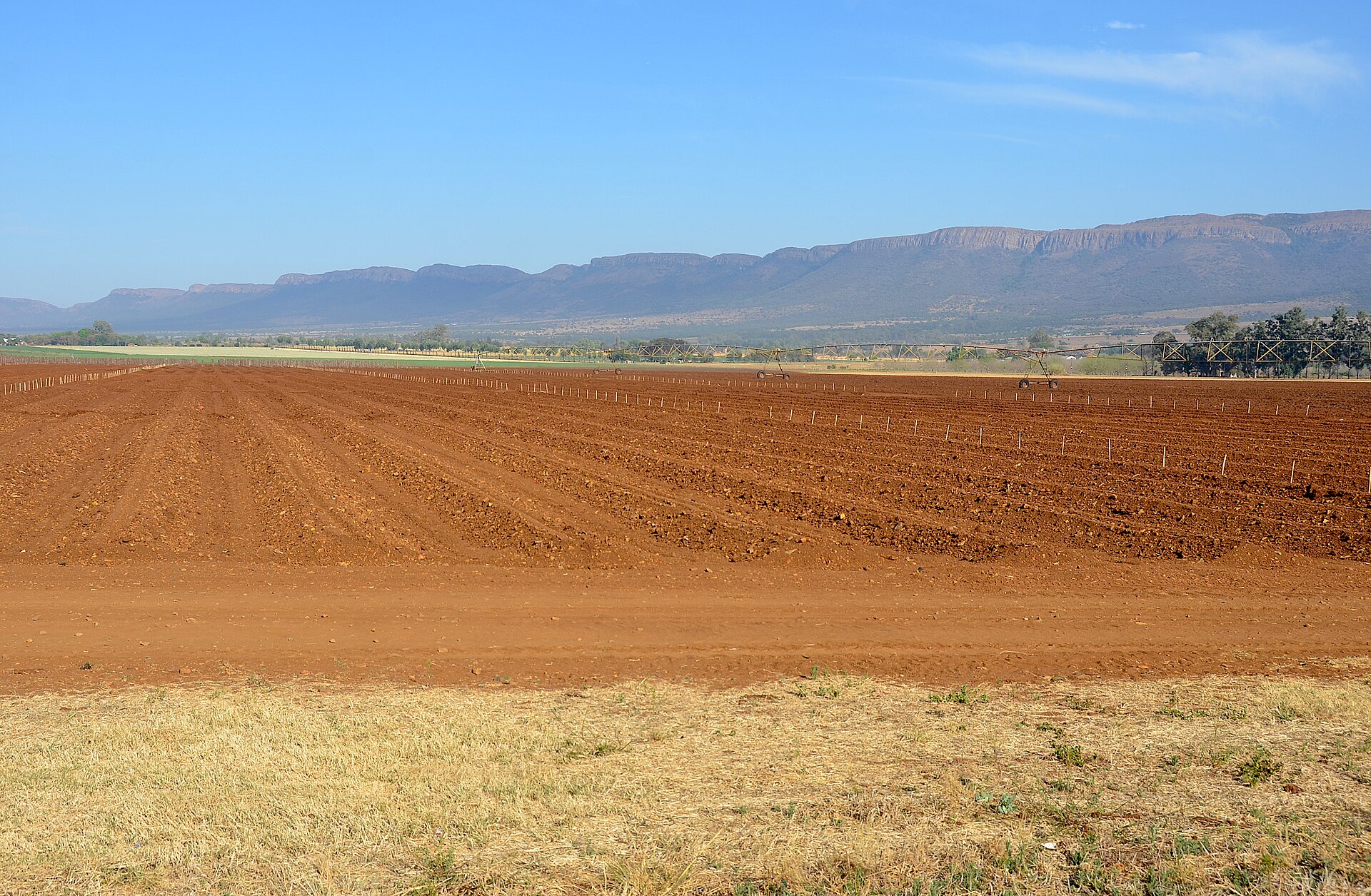

Rustenburg. A story still being written.
10 December 1850: Birth of the town. Source: South African History Online timeline. · 1851: Official founding. Source: South African History Online timeline. · 17–19 March 1852: Volksraad meeting. Source: South African History Online timeline. · 27 December 1880: Siege begins. Source: South African History Online timeline. · 11 October 1899: South African War. Source: South African History Online timeline. · 1925 and 1940: Platinum companies. Source: South African History Online timeline. · 1948 onwards: Apartheid policy. Source: South African History Online timeline. · 1994: Democratic election. Source: South African History Online timeline.
Sources
- South African History Online, Rustenburg timeline 1850–2001. Accessed 17 November 2026. Published 1 April 2011.
- South African History Online, Rustenburg place history.
- Community histories of Rustenburg.
- Prehistory of the Rustenburg area.
- Rustenburg the segregated city.
- Rustenburg Local Municipality. Use the municipality’s own documents for current plans.
- Statistics South Africa. Use a named release before quoting a population figure.
Send a memory or a correction
A note stays pending until an editor reviews the source and the permission. It does not appear in the story by itself.
Sign in to send a note